Erich Gruber: The Austrian Artist Whose Drawings Made Salzburg Look Twice
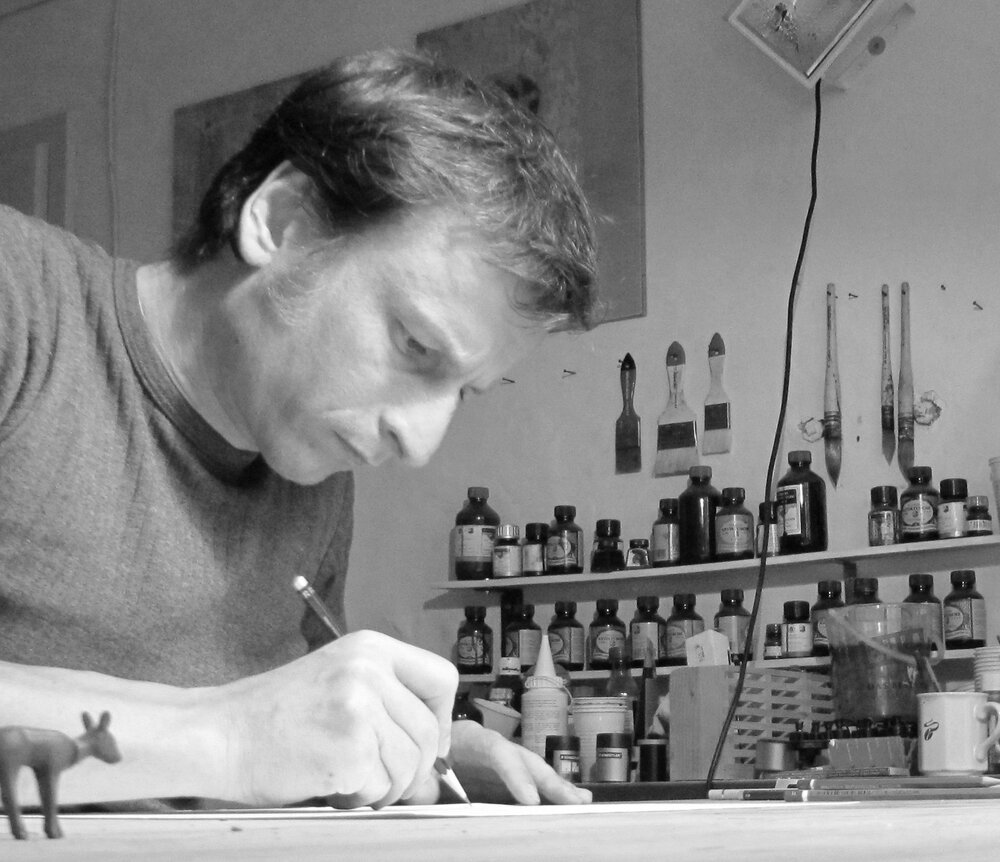
Erich Gruber is an Austrian visual artist born in 1971 in Bischofshofen, Salzburg, known for drawings and works that move between the unsettling and the strangely tender. Based in Salzburg, he has built a career through galleries in Vienna, Brussels, Paris, and beyond — exhibiting at venues from the Museum der Moderne Rupertinum to the Musée d’Art Moderne et Contemporain in Saint-Étienne.
His name carries weight in Austrian contemporary art circles, but his work travels well beyond them. Let’s walk through who he is and how he got there.
Biography of Erich Gruber: Early Life and Background
Gruber was born in 1971 in Bischofshofen, a small town in the Salzburg region of Austria. The setting matters. Salzburg has a long tradition of fusing the religious, the rural, and the deeply theatrical — a cultural backdrop you can sense in his later imagery.
He still lives and works in Salzburg today, which says something about the relationship he’s kept with the place. Many Austrian artists eventually drift to Vienna or abroad. Gruber chose to stay rooted, even as his exhibitions took him across Europe.
Education and Professional Development
Between 1995 and 2001, Gruber studied at the Hochschule Mozarteum in Salzburg under Dieter Kleinpeter. The Mozarteum is best known for music, but its visual arts programs have produced a notable line of Austrian artists, and Kleinpeter’s class shaped a generation of them.
Several formative experiences followed his studies:
- 1999 — International Summer Academy, class of Uwe Bremer
- 2001 — Slavi Soucek Recognition Prize
- 2002 — Residency in Motovun, Croatia, on a Salzburg state scholarship
- 2002–2008 — Working in the Atelier des Landes Salzburg (the State Atelier of Salzburg)
- 2004 — Residency at the Austrian Cultural Forum in Warsaw
That stretch from the late 1990s to the late 2000s is where his visual language really took hold. The Atelier des Landes Salzburg — a state-supported studio program — gave him six years of dedicated working space, which is rare and valuable for any young artist trying to develop a serious body of work.
Career Path and Key Milestones
Gruber’s career follows the steady arc of a working European artist: state support early on, gallery representation in his 30s, international exhibitions through his 40s. No single explosive breakthrough — instead, a careful accumulation of credibility.
A timeline helps clarify the trajectory:
| Year | Milestone |
|---|---|
| 2001 | Completes studies at Mozarteum Salzburg |
| 2004 | First major solo show abroad — Austrian Cultural Forum, Warsaw |
| 2008 | Nominated for the Großer Kunstpreis des Landes Salzburg (Salzburg State Art Prize) |
| 2009 | Solo show “Atemlos” at the Austrian Cultural Forum, Warsaw |
| 2012 | Public art commission “Platzwart und Nonne” at Haus der Natur, Salzburg |
| 2013 | Inclusion in “Younger than Yesterday” at Museum der Moderne Rupertinum |
| 2014 | Solo show “Schwerkraftkammer” at Galerie Heike Curtze und Petra Seiser, Vienna |
| 2017 | Solo show “Camera Obscura” in Vienna; participation in Drawing Now Paris |
The 2008 nomination for the Salzburg State Art Prize was a turning point — official recognition that his work had moved past the emerging-artist phase. From then on, his exhibition list grew thicker each year.
Main Areas of Erich Gruber’s Activity
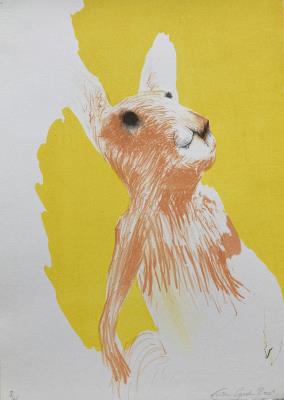
Gruber works primarily as a draftsman, with drawing at the core of nearly everything he does. His exhibition titles tell you a lot about his concerns: Schwerkraftkammer (Gravity Chamber), Flugversuche (Flight Attempts), Atemlos (Breathless), Camera Obscura. There’s a recurring fascination with weight, suspension, breath, and observation.
His work spans several formats:
- Drawings and works on paper — his primary medium, often shown at venues like Galerie Welz and the Salon Zeichnung in Salzburg
- Public art commissions — including the 2012 work Platzwart und Nonne at the Haus der Natur and a 2009 design for the radiotherapy waiting area at the Salzburg State Hospital (SALK)
- Artist books and publications — including Wilde Hunde (2011) and Arbeiten (2008)
- Project-based presentations — site-specific works like Süßer Erlöser at Galerie im Traklhaus or the Werfener Zeichentage drawing days
The radiotherapy waiting area commission is worth pausing on. Designing for a space where people are facing cancer treatment is no small thing — it requires a sensibility most artists don’t possess.
Contributions to the Professional Field
Gruber has been a consistent presence in Austrian contemporary drawing for over two decades. His participation in Salon Zeichnung (Stadtgalerie Salzburg, 2013) and Drawing Now Paris (2017) places him within an active community of artists who have kept drawing alive as a serious contemporary practice — not just as preparation for “real” painting.
His group exhibitions have included some genuinely significant venues:
- Museum der Moderne Rupertinum, Salzburg
- Musée d’Art Moderne et Contemporain, Saint-Étienne, France
- MoMA PS1, New York (NY Art Book Fair)
- Fulham Palace Gallery, London
- Harlan Levey Projects, Brussels
- Akademie der bildenden Künste, Vienna
He’s also represented in public collections through the Kunstankäufe des Landes Salzburg — the state of Salzburg’s art acquisition program — meaning his work is held in Austria’s regional public holdings.
Recognition and Achievements
The honors Gruber has received are the kind that mean something within the Austrian art world without being household names elsewhere:
- 2001 — Slavi Soucek Anerkennungspreis (Recognition Prize)
- 2008 — Nominated for the Großer Kunstpreis des Landes Salzburg
- Multiple state scholarships from the Land Salzburg, including residencies in Warsaw and Motovun
- Inclusion in state art collections through the Kunstankäufe Salzburg program
- Gallery representation by Galerie Heike Curtze und Petra Seiser, one of Vienna’s well-established contemporary galleries
Representation by Heike Curtze and Petra Seiser is itself a quiet achievement. Their gallery has worked with significant Austrian artists for decades, and being on their roster places Gruber in serious company.
Influence on the Industry and Legacy
It’s still early to talk about Gruber’s legacy in any final sense — he’s an active mid-career artist. But certain patterns are already clear.
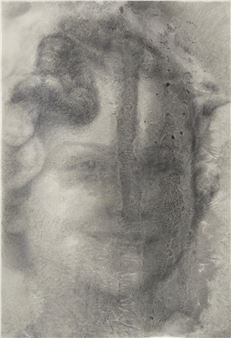
He’s part of a generation of Austrian artists who have insisted that drawing matters as a primary contemporary medium. That argument was less obvious twenty years ago than it is now. Through consistent exhibitions, publications like Wilde Hunde, and participation in dedicated drawing fairs and salons, he’s helped build the case in practice rather than in theory.
A few takeaways from his career path that other artists might find useful:
- Stay where the work is. Gruber built his reputation from Salzburg, not by relocating to a bigger market.
- State support is real support. Six years in the Atelier des Landes Salzburg gave him stability that pure market dependence rarely allows.
- One serious gallery beats five casual ones. Long-term gallery relationships compound over time.
- Public commissions matter. Work in hospitals, public spaces, and institutional settings reaches audiences that gallery shows never will.
What Erich Gruber represents is something quieter than fame: a working artist who has built a substantial body of work over two and a half decades, exhibited at venues across Europe, and held onto a coherent visual vision throughout. His drawings continue to be acquired, shown, and discussed. For anyone interested in contemporary Austrian art — particularly the strong drawing tradition that runs through it — his name is one worth knowing. You can see his ongoing work at his website, erichgruber.at, or browse his pieces held in Austria’s federal art collection through the Artothek des Bundes.