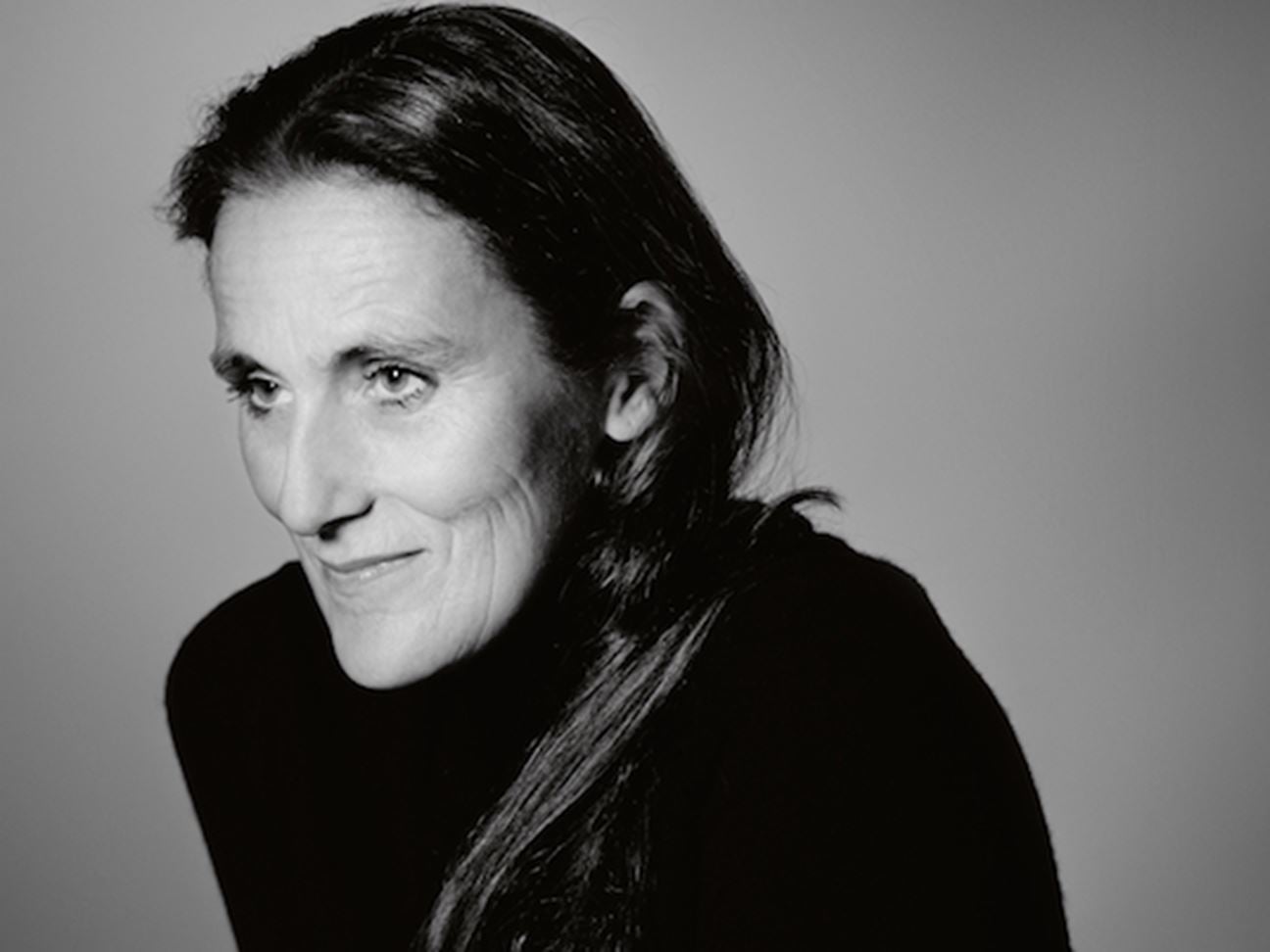
Fabienne Verdier: The French Painter Who Studied Calligraphy in China for a Decade
Fabienne Verdier is one of those rare artists whose biography reads like a novel. A young Parisian woman who, in the early 1980s, packed her bags and went to China to study with the last surviving masters of traditional calligraphy — at a time when many of them had survived the Cultural Revolution barely intact. Ten years later she came back with something almost no Western painter has: a real, deep understanding of the Eastern brush.
What she’s built since then is unlike anything else in contemporary French art. Massive canvases laid on the floor. Brushes the size of a child, suspended from steel cables. Paintings made not by the wrist but by the entire body. In this article we’ll walk through her biography, her unique technique, her major series, exhibitions, and what her works cost on the international market.
Biography and Artistic Journey
Fabienne Verdier was born in 1962 in Paris. She grew up in a generation of French art students who were finishing their training right as the European art scene was shifting away from painting altogether.
She studied at the École des Beaux-Arts in Toulouse and graduated young — at 21. Her academic record was exceptional, but she sensed that the Western tradition alone wasn’t going to give her what she was looking for.
So she made a decision that almost no one else of her generation made. In 1983, with a modest scholarship, she traveled to the Sichuan Fine Arts Institute in Chongqing.
The timing matters. China was still emerging from the Cultural Revolution. Many of the great calligraphy masters had been imprisoned, censored, or worse. Their knowledge — which had been transmitted from teacher to student for centuries — was on the verge of disappearing.
Verdier spent ten years there. She lived through poverty, illness, and bureaucratic harassment. She studied under masters like Huang Yuan and learned not just brushwork but an entire philosophical system around mark-making.
Her career milestones since returning to France:
- 1993 — return to Paris and the slow process of integrating what she had learned
- 2003 — publication of “Passagère du silence,” a memoir about her China years that became a bestseller
- 2014 — major exhibition at the Musée Granet in Aix-en-Provence, paired with works by Cézanne
- 2019 — solo show at Voorlinden Museum, Netherlands
- 2021–2023 — international presentations at Waddington Custot (London) and Lévy Gorvy (New York)
The Fabienne Verdier Technique: Painting with Giant Brushes
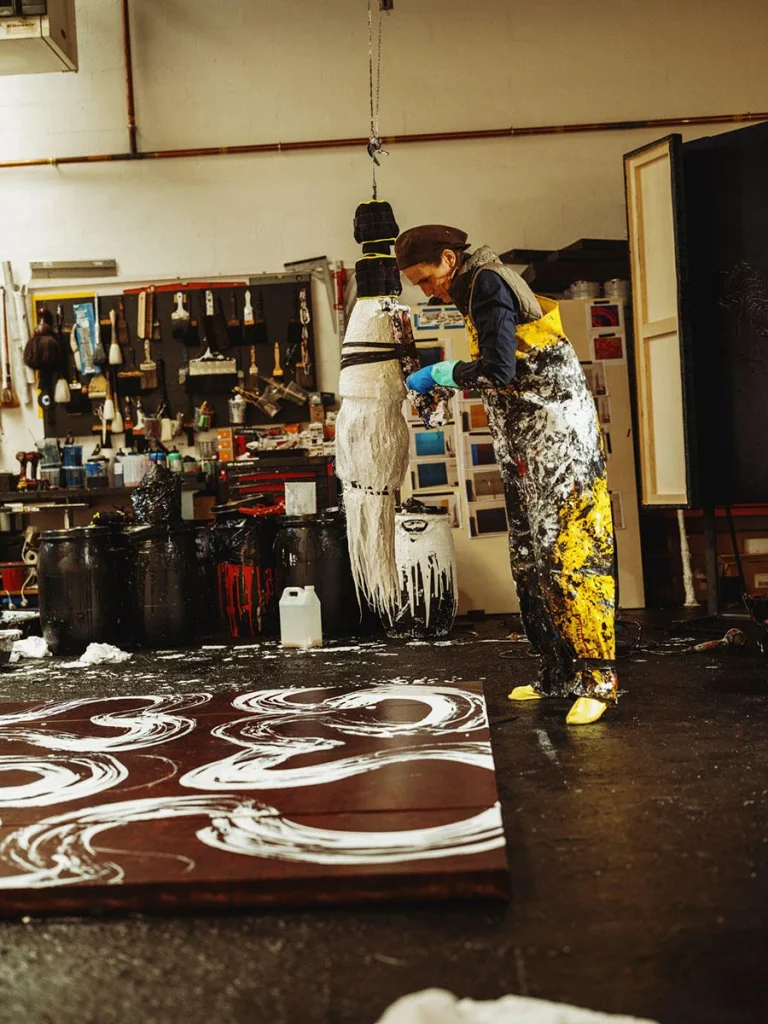
If you’ve ever seen footage of Verdier in her studio, you don’t forget it.
Her brushes aren’t held in the hand. They’re suspended from the ceiling on a custom-built rig — like industrial pulleys carrying massive horsehair tools that can weigh several kilos. The biggest of them are bigger than her own torso.
She lays the canvas flat on the studio floor. Then she walks over it, guiding the brush with both hands and her full body weight. A single stroke can take seconds — but the preparation behind it can take days.
The setup is purposeful. Traditional Chinese calligraphy works at the scale of the wrist. Verdier wanted to keep the principles but multiply the scale by a hundred. The result is painting that’s physical in a way Western abstract expressionists rarely achieved — even Pollock, by comparison, looks contained.
Key elements of her working process:
- Custom-built suspension system — engineered to allow precise control of brushes too heavy to hold
- Pigments mixed with binders — based on her own recipes developed over years
- Single-gesture compositions — many works are made in one continuous movement
- Long preparation, short execution — meditation, breathwork, and planning before the brush touches anything
Fabienne Verdier Calligraphie — Roots in Eastern Tradition
The technique came from somewhere specific. Chinese calligraphy isn’t just writing pretty — it’s a complete discipline rooted in Daoist and Confucian thought.
What Verdier absorbed in Sichuan goes well beyond hand skills. She learned to think about painting as a transmission of energy — what the Chinese call qi — from the body through the brush onto the surface.
The core principles she carries into her work:
| Concept | Meaning |
|---|---|
| Qi (氣) | Vital energy, breath behind the gesture |
| Yi (意) | Intention, mental form before the mark |
| Shi (勢) | Momentum, the dynamic flow of the stroke |
| Yixiang (意象) | The image that emerges from intention and gesture together |
This isn’t decorative borrowing. It’s the actual operating system of her work. When she stands above a canvas with the brush above her head, what she’s doing is inseparable from what a calligrapher in Tang dynasty China was doing — just transposed onto contemporary scale and pigment.
That makes her one of the very few European painters who can claim genuine fluency in both traditions, not just admiration of one for the other.
Key Themes and Series in Her Work
Verdier’s subject matter is abstract, but it’s never empty. Each series circles around a specific question.
Mountains and landscape — early in her post-China career, she returned to the motif of the mountain, drawing on Song dynasty painters and her own walks through the French countryside.
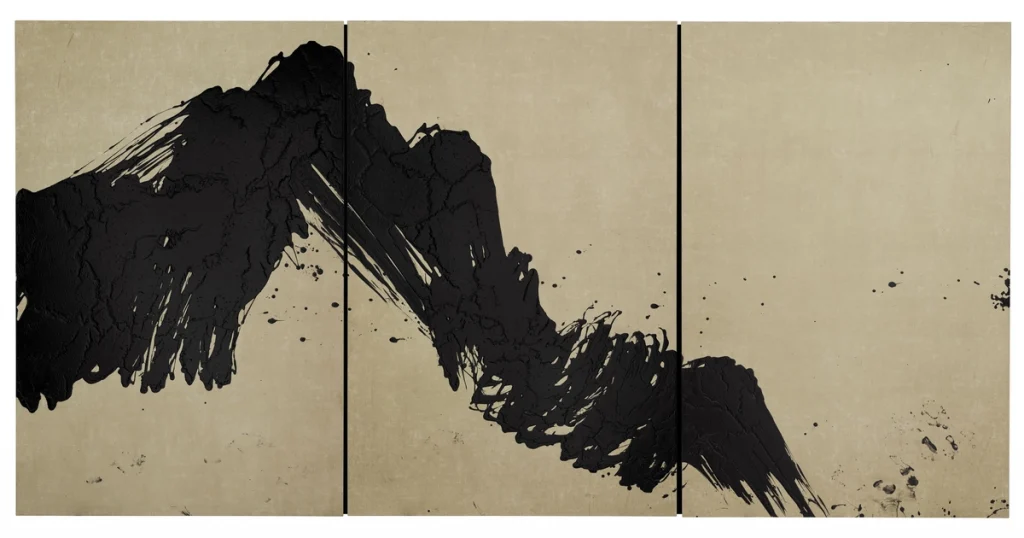
Sound and music — a major thread of her work involves dialogues with composers and musicians. She has painted while listening to live performances, translating sonic structures into visible marks.
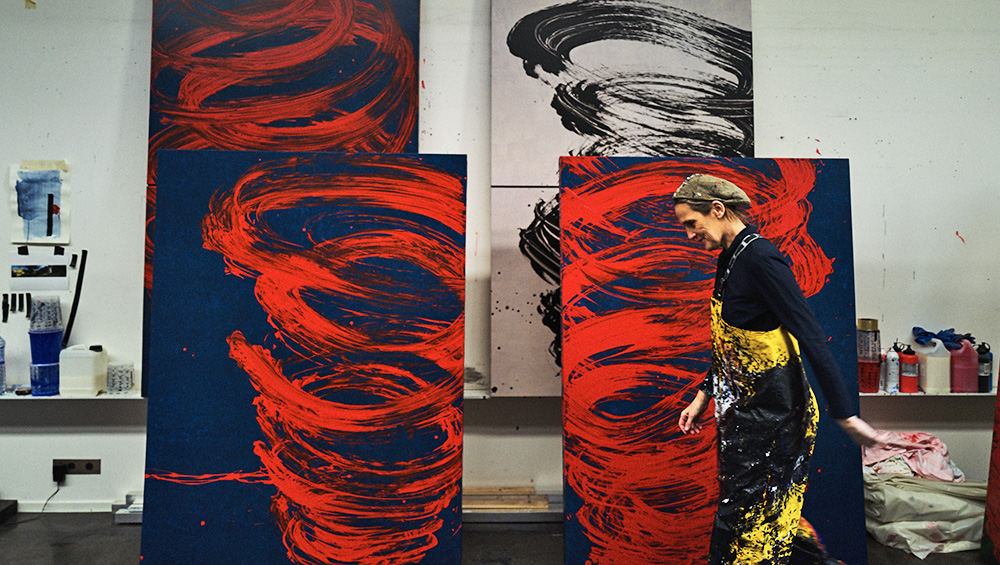
Polyphonies (2014–2019) — a series in dialogue with Flemish primitive painters from the Musée Unterlinden’s collection, made during a long residency at the museum.
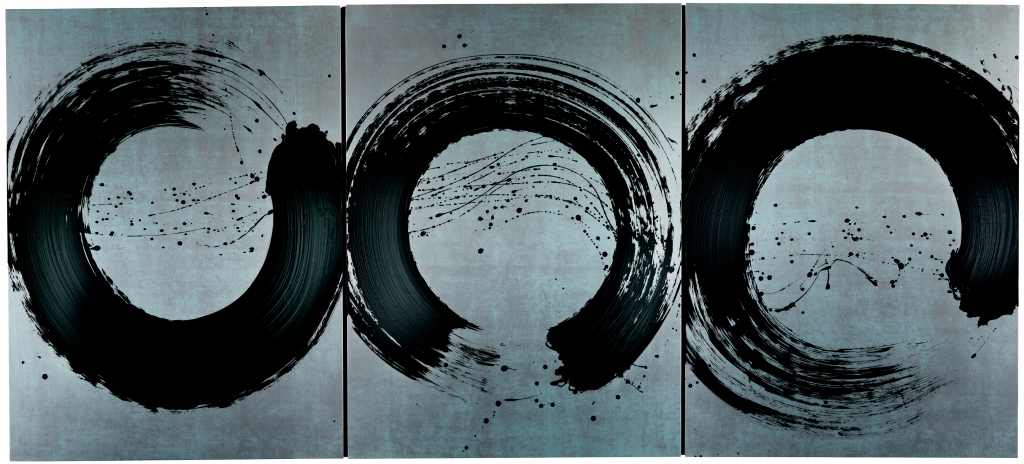
Vortex paintings — circular, spinning compositions that capture the geometry of natural forces — water, wind, gravitational pull.
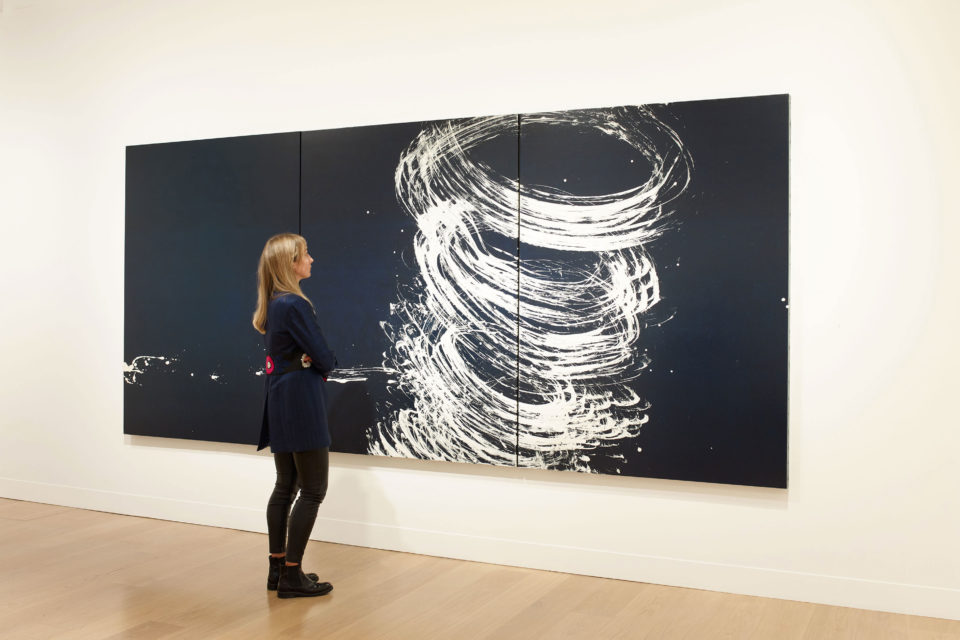
Walking-in-Stone (2018) — large-scale works inspired by the topography and geological structures of mountain ranges.
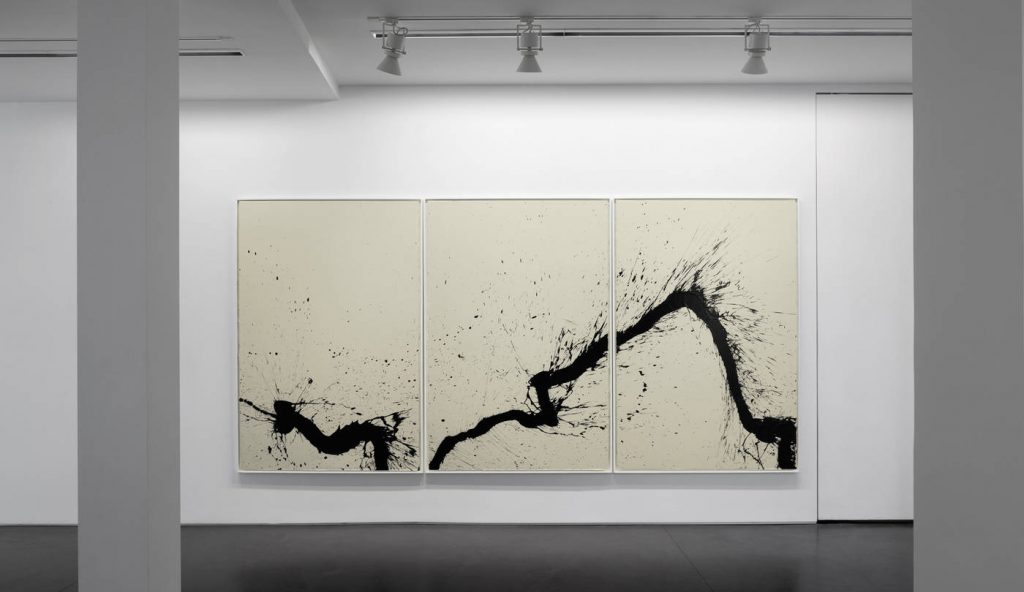
The constant across all of it is movement. Even when the canvas seems still, you can read the speed and direction of the gesture that made it.
Fabienne Verdier Mute — Silence as a Subject
The “Mute” body of work marks a shift toward restraint.
After years of explosive, gestural compositions, Verdier turned toward something quieter. Smaller-scale works. More white space. Marks that suggest rather than declare.
The series explores silence as an active subject — not absence but presence. The Chinese tradition has a long lineage of valuing what’s not painted as much as what is. The empty space in a Song dynasty landscape is where the mountain’s mystery lives.
In “Mute,” Verdier brings that lesson forward. The works ask the viewer to slow down, to notice subtle weight shifts in a single stroke, to see how much can be communicated with very little.
For collectors paying attention to her trajectory, this body of work represents a mature stage — less spectacular than the giant brush paintings, but more demanding and more rewarding to live with.
Exhibitions and Museum Recognition
Fabienne Verdier Expo Highlights and Major Shows
Verdier’s exhibition history is dense, and unusually weighted toward museum projects rather than commercial gallery cycles.
Major presentations include:
- Musée Granet, Aix-en-Provence (2014) — paired with Cézanne, a landmark moment of recognition
- Musée Unterlinden, Colmar (2019) — long residency producing the “Polyphonies” series
- Voorlinden Museum, Netherlands (2019) — large-scale solo show
- Asia Society, Hong Kong (2018) — recognition from the Asian art establishment
- Cernuschi Museum, Paris — works in the permanent collection
- British Museum, London — works in the print and drawing collection
- Centre Pompidou, Paris — works in the permanent collection
- Waddington Custot, London (2022) — major commercial exhibition
- Lévy Gorvy Dayan, New York (2022) — international gallery presence
Her gallery representation includes Waddington Custot in London and Lévy Gorvy Dayan in New York, with strong institutional support across France and the Netherlands.
Books and Publications
For anyone wanting to go deeper into Verdier’s thinking, the publications are essential. Unlike many contemporary artists, she has written extensively herself — and beautifully.
Essential Fabienne Verdier Books for Collectors and Readers
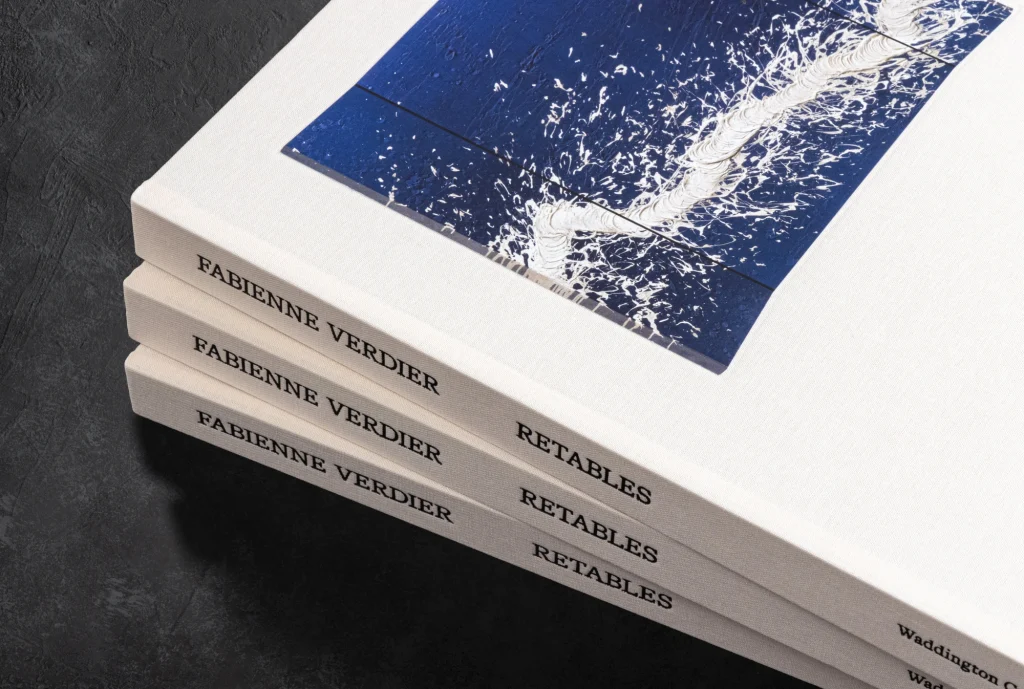
The most important volumes:
- “Passagère du silence” (Albin Michel, 2003) — her memoir about the China years. A bestseller in France, translated into multiple languages, and the single best entry point into her world.
- “L’unique trait de pinceau” (Albin Michel, 2001) — a meditation on the single brushstroke and its meaning in calligraphic tradition.
- “Sound Lines” (Hatje Cantz) — exhibition catalogue documenting her work in dialogue with music.
- “Polyphonies” / “Le Chant des étoiles” (Actes Sud) — the catalogue from the Musée Unterlinden residency.
- “Verdier: Rencontres” — collected conversations with scientists, musicians, and philosophers.
These are widely available through French art publishers, museum shops, and online retailers including Albin Michel, Actes Sud direct, and Hatje Cantz.
Market Value of Fabienne Verdier’s Work
Fabienne Verdier Price Dynamics on the Art Market
Verdier sits in an interesting market position. She’s institutionally recognized at the highest level, but her auction record is more measured than artists with comparable museum exposure.
Approximate price ranges:
| Work type | Typical price range |
|---|---|
| Works on paper | €15,000 – €80,000 |
| Mid-scale canvases | €80,000 – €250,000 |
| Major large-format paintings | €250,000 – €600,000+ |
| Museum-scale installations | Negotiated, often unique commissions |
What drives value in her market:
- Scale — large canvases made with the suspended-brush method command top prices
- Period — works tied to landmark exhibitions (Granet, Unterlinden) carry premiums
- Series association — pieces from “Polyphonies” and “Vortex” are particularly sought after
- Provenance — works from Waddington Custot or Lévy Gorvy are easier to resell
- Documentation — pieces published in major catalogues are more liquid
A practical note for buyers: Verdier’s primary market is tightly managed. New canvases tend to be placed directly with collectors and institutions through her gallery network. The secondary market — auctions and private sales — is where most public opportunities arise. Works on paper offer a more accessible entry point for collectors building a position in her work.
Fabienne Verdier built something genuinely rare. She didn’t just borrow from another tradition — she lived inside it long enough to absorb it, then took the time to translate it into a Western painterly language. That kind of cross-cultural fluency takes decades, and it can’t be faked.
Her influence is already shaping a younger generation of painters who are looking past the usual references. Artists working with gesture, breath, and physical engagement with the canvas keep coming back to her example. So do composers, choreographers, and writers who find in her work a model for cross-disciplinary thinking.
Where her practice goes next is hard to predict. But the direction she opened — Eastern discipline meeting Western abstraction at full physical scale — has only just started to be explored. And in a moment when contemporary painting is hungry for depth and authenticity, her body of work feels more relevant, not less.
Frequently Asked Questions
Fabienne Verdier is a French contemporary painter born in Paris in 1962. She is best known for spending ten years (1983–1993) studying traditional Chinese calligraphy under master teachers in Sichuan, and for developing a unique painting method using giant suspended brushes. Her works are held in major collections including the Centre Pompidou, the British Museum, and the Cernuschi Museum.
“Parisian art” is a loose term referring to art produced in or associated with Paris — historically the world’s leading art capital from the 19th century through much of the 20th. It encompasses Impressionism (Monet, Renoir, Degas), Post-Impressionism (Cézanne, Van Gogh’s Paris years), Cubism (Picasso, Braque at the Bateau-Lavoir), and the École de Paris of the interwar period (Modigliani, Soutine, Chagall). Today, Paris remains a major hub for contemporary art with galleries, museums, and fairs like Paris+ par Art Basel.
The most famous French artwork is arguably Liberty Leading the People (1830) by Eugène Delacroix, an iconic painting of the July Revolution housed in the Louvre. Other strong contenders include Impression, Sunrise (1872) by Claude Monet — the painting that gave Impressionism its name — The Card Players by Paul Cézanne, and Édouard Manet’s Olympia (1863). The Louvre, Musée d’Orsay, and Centre Pompidou hold most of these.