Bilal Hamdad: The Franco-Algerian Painter Capturing the Soul of Modern Paris
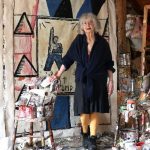
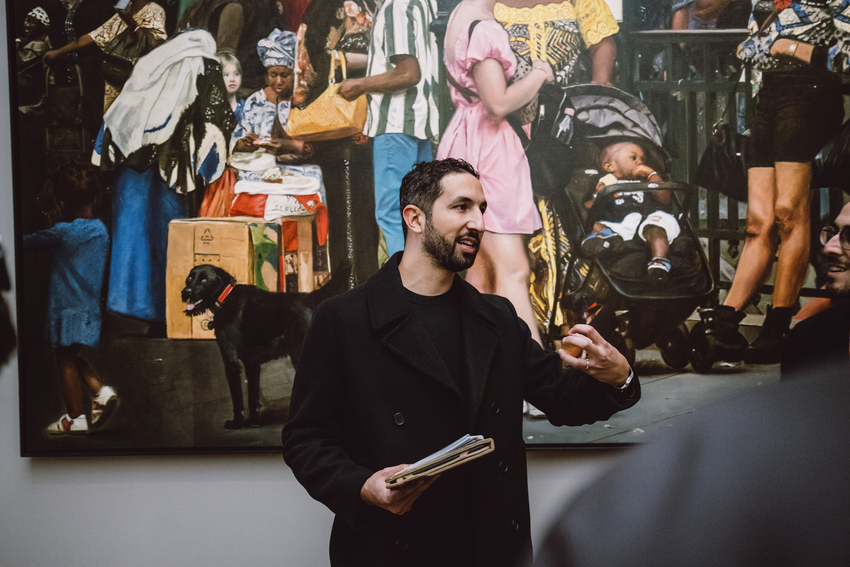
There are painters who chase trends, and there are painters who quietly build something that lasts. Bilal Hamdad belongs to the second kind. The Franco-Algerian artist, born in 1987 in Sidi Bel Abbès, has spent the past few years turning the daily texture of Paris — its métro exits, anonymous passersby, half-lit cafés — into oil paintings that feel both deeply contemporary and weirdly timeless. His 2025 exhibition at the Petit Palais cemented something the art world had been whispering about for a while: this is one of the most compelling figurative voices of his generation.
If you’ve stumbled across his name through Art Basel Paris, an Instagram crop of one of his canvases, or a friend who came back from the Petit Palais slightly shaken, this is the context that actually makes sense of the work.
Who Is Bilal Hamdad: From Sidi Bel Abbès to Paris
Hamdad’s story doesn’t follow the usual prodigy script. He grew up in Sidi Bel Abbès, a town in north-western Algeria nicknamed “Little Paris” for its Haussmannian architecture — a small, telling coincidence given where his career would land. As a teenager, he was more interested in football than art.
The shift happened at 18. His father, a painter who couldn’t make a full living from his work, pushed him toward the local Beaux-Arts. The reasoning was almost intuitive: of his five children, Bilal was the only one whose opinion he asked when finishing a canvas. He saw something nobody else had bothered to look for.
The trajectory from there reads like a clean line on paper:
- 2010 — graduates from the École des Beaux-Arts of Sidi Bel Abbès
- 2012 — first solo show at the Maison de la culture Kateb Yacine
- 2018 — graduates from the École Nationale Supérieure des Beaux-Arts in Paris; wins the Khalil de Chazournes Prize
- 2019 — first Paris solo show, Quatre chemins, at H Gallery
- 2023 — wins the François Schneider Foundation Prize
- 2023–2024 — residency at Casa de Velázquez in Madrid
- 2025 — solo museum show Paname at the Petit Palais
He now works from a studio in Paris’s 19th arrondissement and is represented by Galerie Templon, with spaces in Paris, Brussels and New York.
The Artistic Style and Themes Behind Bilal Hamdad’s Paintings
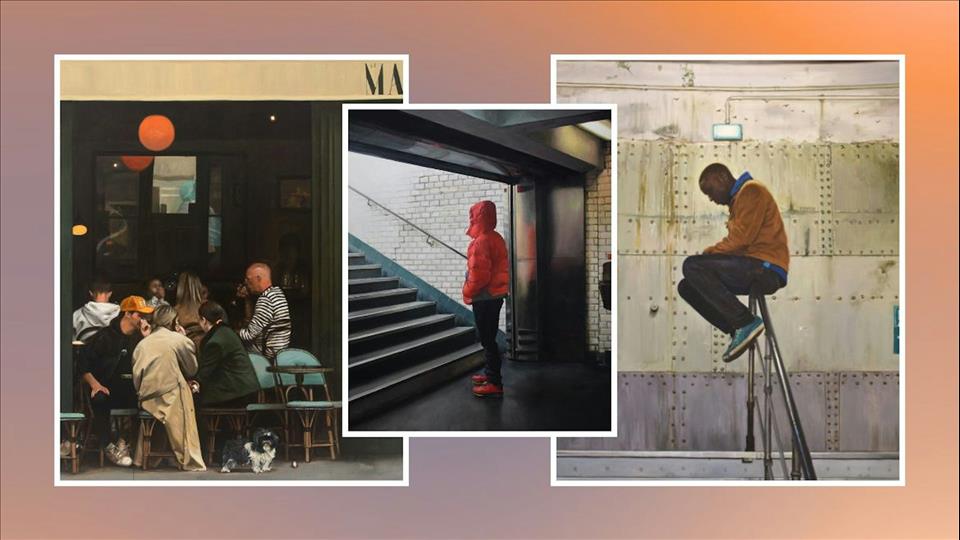
Hamdad paints what most people scroll past. Bilal Hamdad paintings are almost always built around a single principle: the solitary figure inside the crowd. A woman waiting at a metro exit. A man eating alone in a café. Bodies in transit, half-lost in their phones, never quite present.
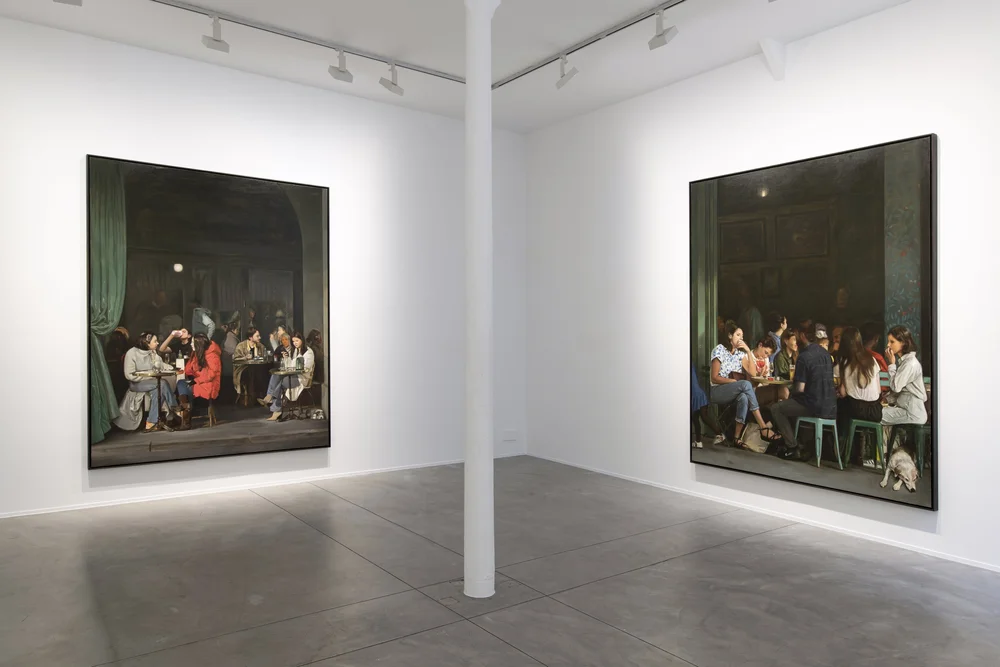
His method is unusual but practical. He walks the city with his camera, treating it as a sketchbook. Back in the studio, he combines several photos taken at different moments to “reconstruct the memory” — not a single instant, but the emotional weight of a place over time. The result is naturalistic without being photographic. You can feel the human filter on every canvas.
A few hallmarks of his style:
- Large formats — many canvases pass the 2-meter mark, pulling viewers into the scene at human scale
- Oil paint, traditional techniques — no shortcuts, no digital manipulation in the final work
- Chiaroscuro — strong contrasts of light and shadow, borrowed from the Baroque
- Anonymous subjects — almost never named portraits, almost always universal figures
- Recurring themes — solitude, immigration, urban displacement, intimacy in public space
His painting Rive droite (2021) now hangs in the National Museum of the History of Immigration. Other works are held in the Société Générale Art Collection and the François Schneider Foundation.
“Paname” at the Petit Palais: A Defining Exhibition
For anyone tracking contemporary figurative painting in Europe, Paname was the show of the season. Running from October 17, 2025 to February 8, 2026, the Bilal Hamdad Petit Palais exhibition gathered around twenty large-scale canvases — including two new pieces created specifically for the museum — and placed them in direct dialogue with the Petit Palais’s permanent collection of 19th-century masters.
The framing matters. Hamdad’s contemporary Parisians don’t sit in a separate white-cube gallery. They share rooms with Courbet, Pelez and Lhermitte. The effect is unsettling in the best way: the same city, the same kinds of bodies, separated only by 150 years and a smartphone.
A few key works on view:
| Painting | Year | Notable detail |
|---|---|---|
| Paname | 2025 | Monumental 300 × 394 cm canvas, the show’s title piece |
| Miroir des Astres | 2024 | Borrows directly from Baroque aesthetics |
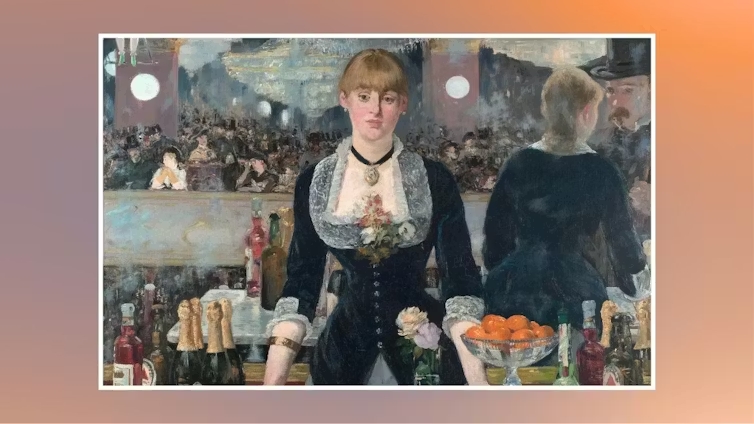
| Sérénité d’une ombre | 2024 | Echoes Manet’s still-life tradition |
| Reflets | 2024 | 245 × 200 cm, private collection |
| L’Attente | 2020 | Société Générale Art Collection |
The exhibition opened during Art Basel Paris 2025, which guaranteed a flood of international visitors — and reactions that surprised even the artist. He’s mentioned an Algerian woman who started crying in front of his canvases, moved by seeing an artist from her country shown at the Petit Palais.
Major Influences and Dialogue with the Old Masters
You can’t talk about Bilal Hamdad’s work without talking about who he’s reading, looking at, arguing with on canvas. His references are deliberate, not decorative.
The names he returns to most often:
- Caravaggio and Velázquez — for the architecture of light and the seriousness given to ordinary people
- Rubens — for compositional density and the weight of bodies
- Manet and Courbet — for the radical insistence that contemporary life is a worthy subject
- Degas and Léon Lhermitte — for capturing crowds and labour without sentiment
- Edward Hopper — for the American grammar of urban loneliness
- John Everett Millais — Ophelia haunts a recurring series of his on immigration and drowning
His residency at Casa de Velázquez in Madrid pushed the Spanish influences forward. The 2024 Reflets exhibition at Templon Brussels showed canvases where Velázquez and Goya quietly bleed into scenes of contemporary urban gatherings.
What makes this more than borrowing is the friction. Hamdad isn’t quoting Manet to look learned — he’s testing whether the same questions Manet asked about modern Paris still hold up in 2025. The honest answer his paintings give: yes, but the loneliness has gotten louder.
Where to See and Buy Bilal Hamdad’s Work: Galleries, Availability and Price Range
For collectors and curious viewers alike, the practical map looks like this.
Where to see the work in person:
- Galerie Templon — Paris, Brussels and New York (his primary representation)
- H Gallery, Paris — his earlier representation, still holds archival material
- Petit Palais, Paris (until February 8, 2026)
- Goya Museum, Castres — joint exhibition with Francis Harburger (until March 8, 2026)
- Permanent collections: Musée National de l’Histoire de l’Immigration, François Schneider Foundation, Société Générale Art Collection
Where to look for Bilal Hamdad for sale:
If you’re searching for available works, the realistic starting points are Templon directly, gallery platforms like Ocula and Artsy (which lists him with biographical and exhibition data), and occasional secondary-market appearances. Most museum-grade pieces — including the title canvas Paname — were already marked sold during the 2025 cycle. Demand has clearly outpaced supply.
On Bilal Hamdad price:
There isn’t a public auction price index for him yet — he’s still primarily a primary-market artist, sold through galleries rather than auction houses. That said, a few markers are useful:
- His pieces are now held by major institutional collections, which historically pushes secondary-market prices
- Large-scale oils in the 200 × 240 cm range have entered serious private and corporate collections
- Templon represents him across three continents, signalling top-gallery pricing structure
- Major institutional shows (Petit Palais, Louvre-Lens, MO.CO) substantially shift collector valuation
For specific availability and current pricing, contacting Templon directly is the only honest answer. Anything else is guesswork.
A painter who spends years staring at the same metro exits until they reveal something unexpected isn’t going to fade into background noise. Hamdad’s work treats the city the way Hopper treated American hotel rooms or Hammershøi treated empty Copenhagen apartments — as evidence that solitude has texture, and that texture is worth painting carefully.
Whether Paname turns out to be the breakthrough or just another step on a longer arc, his trajectory points one way. The painters of modern life still exist. He just happens to be one of them.
Frequently Asked Questions
Bilal Hamdad is a Franco-Algerian painter born in 1987 in Sidi Bel Abbès, Algeria, now based in Paris. He’s known for large-scale oil paintings depicting solitude in contemporary urban life, particularly in Paris. He graduated from the École Nationale Supérieure des Beaux-Arts de Paris in 2018, is represented by Galerie Templon, and held a major solo exhibition titled Paname at the Petit Palais from October 2025 to February 2026.