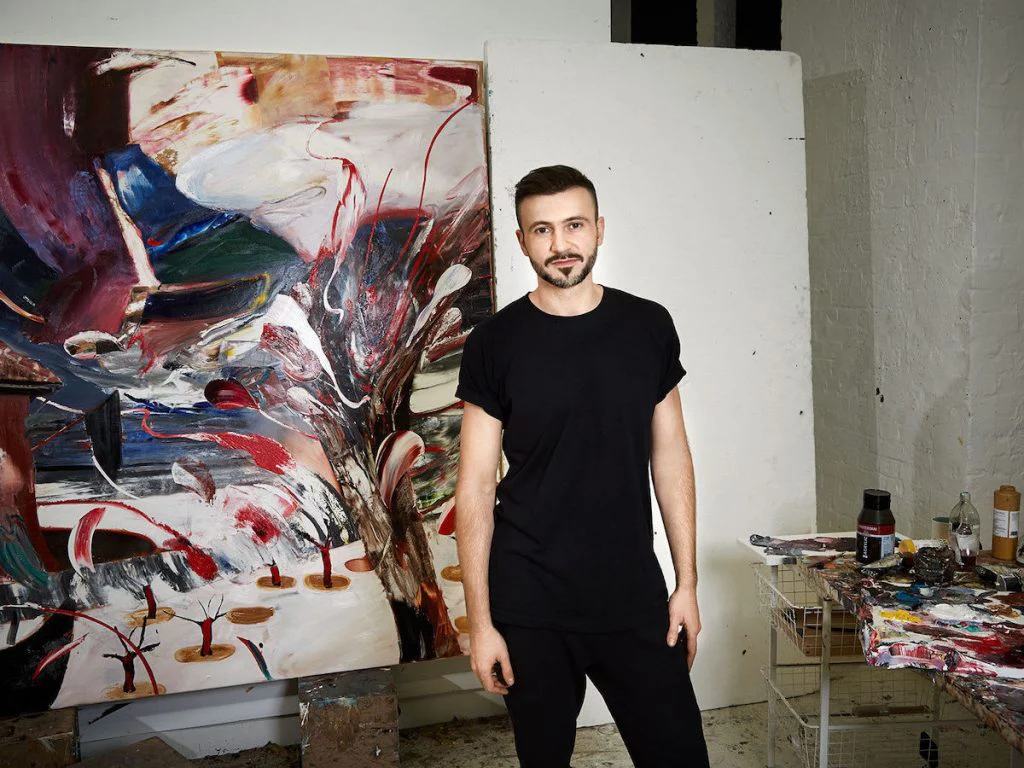
Adrian Ghenie: The Romanian Painter Who Conquered the Global Art Market
Adrian Ghenie is one of those rare contemporary artists whose name is uttered in the same breath at Christie’s evening sales and in serious museum curatorial offices. Born in 1977 in a small Romanian town, he became one of the most expensive living painters of his generation in just two decades. His canvases are layered, anxious, and often disturbing — yet collectors compete for them, paying tens of millions of dollars.
In this article, we’ll examine his journey from Cluj-Napoca to Berlin, dissect his unique collage technique, look at his most famous works, and figure out how much his paintings actually cost — and why.
Biography and Artistic Journey: Adrian Ghenie CV
Adrian Ghenie was born on August 13, 1977, in Baia Mare — a mining town in northern Romania. His childhood unfolded against the backdrop of the dying Ceaușescu regime, and that experience left a permanent mark on his future work.
He studied at the University of Art and Design in Cluj-Napoca, graduating in 2001. The city would later become an important hub for contemporary Romanian art largely because of him.
In 2005, together with Mihai Pop, Ghenie co-founded Plan B gallery in Cluj. The space quickly evolved into a launching pad for an entire generation of Romanian artists. Two years later, Plan B opened a second location in Berlin — and Ghenie himself relocated there.
Berlin proved to be the right setting. The German capital gave him distance from his homeland and access to the international scene. It was here that his career took on global momentum:
- 2007 — opening of Plan B Berlin
- 2009 — first solo show at Haunch of Venison in London
- 2014 — exhibition at the Pompidou Centre in Paris
- 2015 — representing Romania at the Venice Biennale
- 2018 — joining the Pace Gallery roster
Today Ghenie splits his time between Berlin and Cluj, continuing to work in his signature manner.
Artistic Style and Collage Technique
Ghenie’s style is impossible to confuse with anyone else’s. Smeared faces, deformed figures, layers of paint applied with a palette knife — all of it creates a sense of memory crumbling before your eyes.
The Influence of History and Personal Trauma on His Work
History is the main character in Ghenie’s paintings. He returns over and over to the dark corners of the 20th century: the Holocaust, totalitarianism, the Ceaușescu dictatorship, scientific experiments under fascism.
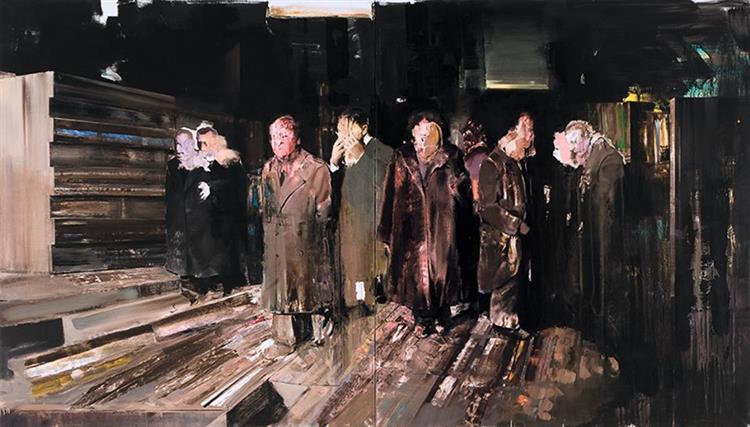
His protagonists are real historical figures. Hitler appears alone in an empty room. Josef Mengele stands by the window of his Argentine hiding place. Charles Darwin gazes at the viewer through a haze of paint. Vincent van Gogh — Ghenie’s personal hero — turns up repeatedly as a kind of alter ego.
Why this obsession with the past? Ghenie grew up in a country where history was rewritten by every regime. For him, painting becomes a way of digging through layers of falsified memory and getting at something real — even if that something is uncomfortable.
His Eastern European background is felt in everything: in the muted palette, the architectural emptiness of his interiors, the sense that something terrible has just happened or is about to.
Adrian Ghenie Collage — Building the Image
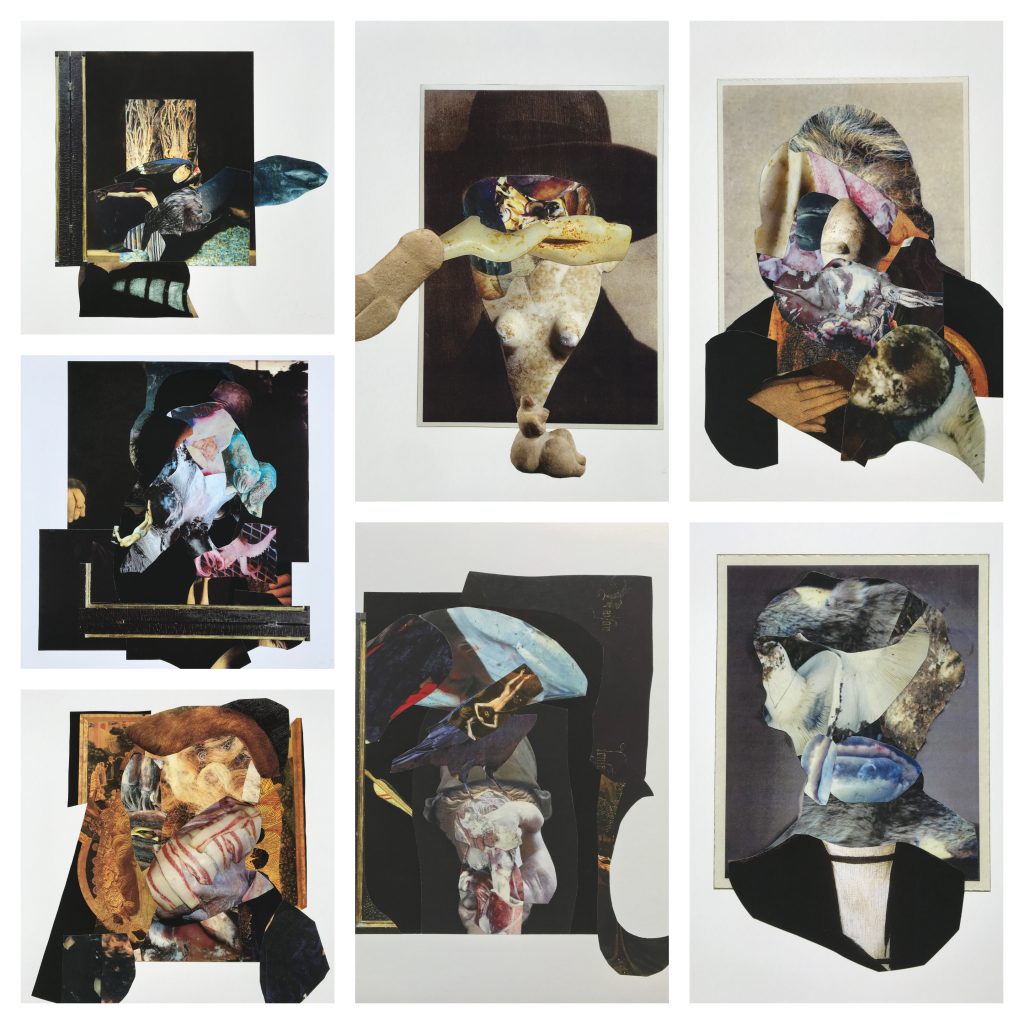
Although Ghenie is a painter, he thinks like a collagist. Before touching the canvas, he assembles small paper collages — splicing together fragments from photographs, film stills, art history books, and personal archives.
These tiny studies become blueprints. The painting is then constructed from disparate sources: a face from one photograph, a hand from another, a background from a third. The viewer sees a unified image, but it’s been stitched together from a dozen visual quotes.
His technique on canvas is just as layered:
| Tool | Effect |
|---|---|
| Palette knife | Smears and distortions, the sense of “swiped” memory |
| Brush | Detail in faces, classical drawing |
| Stencil | Sharp geometric edges, traces of mechanical reproduction |
| Layering | Depth, the feeling of an image emerging from beneath another |
In all of this, you hear a conversation with the masters. Van Gogh — in the impasto and emotional charge. Francis Bacon — in the deformed faces and isolated figures. Velázquez — in the dark, theatrical interiors.
The Most Famous Adrian Ghenie Paintings
Ghenie’s body of work is built around several major series, each revolving around a particular theme.
“Dada is Dead” (2008–2010) — an early cycle dedicated to the Dadaist movement and the absurdity of the 20th century. Here for the first time you see his trademark merging of historical figures with painterly chaos.
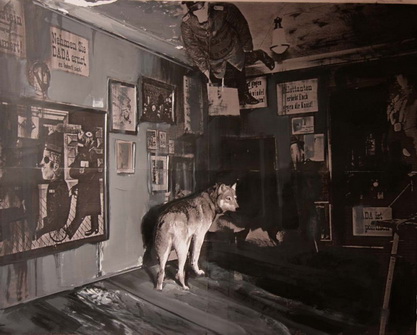
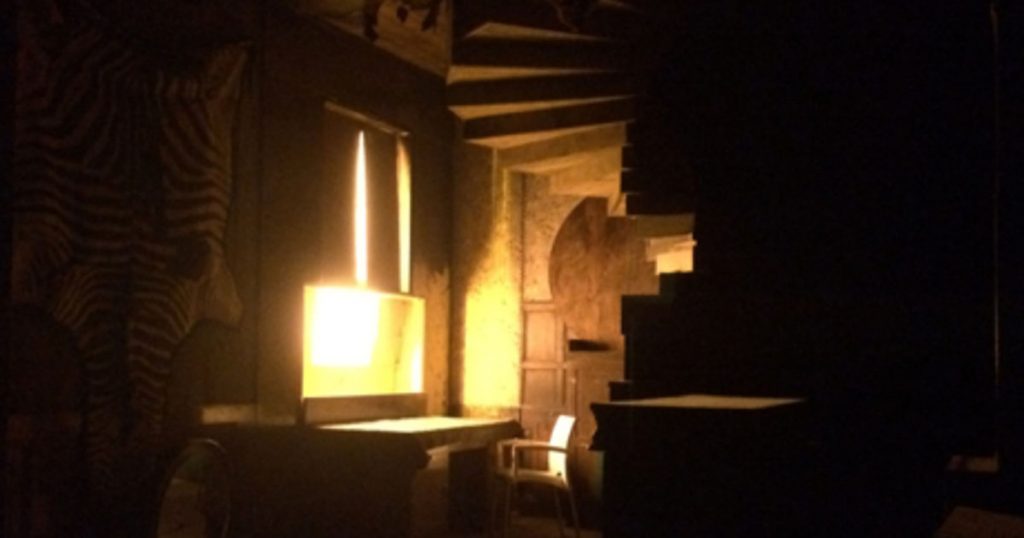
“Darwin’s Room” (2013–2014) — Ghenie’s reflections on evolution, science, and where the boundaries of progress lie. The figure of Charles Darwin appears in different incarnations, often in domestic, almost cozy interiors that contrast with the weight of the subject.
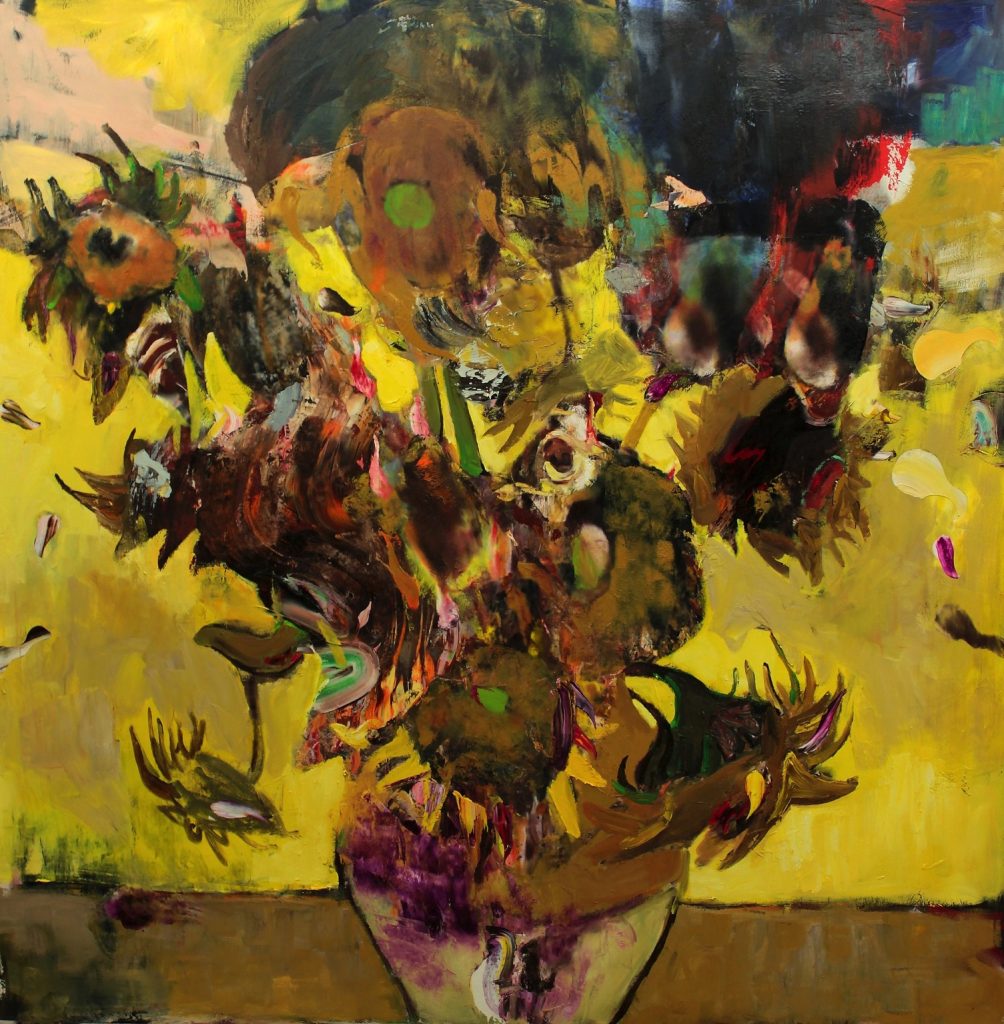
“The Sunflowers” (2014) — a direct dialogue with Van Gogh. Ghenie reinterprets the iconic still life, layering the year 1937 onto it — the moment when the Nazis declared modernist art “degenerate.”
“Nickelodeon” (2008) — a massive canvas referencing American cinema of the early 20th century. It became one of the artist’s most expensive works at auction.
The self-portraits deserve a separate mention. Ghenie regularly paints himself — often with a smeared or completely absent face. It reads as a meditation on identity in the age of mass surveillance and digital flattening.
Adrian Ghenie Pie Fight — The Artist’s Cult Series
If you had to name a single work that made Ghenie famous, it would be the “Pie Fight” series.
The idea is built on a simple visual gag from silent cinema: people throwing pies in each other’s faces. A favorite move of Charlie Chaplin and Buster Keaton. Pure slapstick.
But Ghenie takes that comic moment and turns it into something disturbing. In his version, the pie isn’t a joke — it’s a metaphor for violence, for being hit in the face, for losing dignity. The targets are sometimes anonymous figures, sometimes recognizable historical faces.
The series includes several key works:
- “The Pie Fight Study” (2008) — the first iteration, a small but technically sophisticated piece
- “Pie Fight Interior” (2008) — a large-scale canvas with multiple figures
- “Pie Fight Interior 12” (2014) — sold at Sotheby’s for over $1.5 million
This series turned out to be a crucial moment for the auction market. It was through “Pie Fight” that collectors first realized Ghenie was an artist worth investing in seriously.
Exhibition Activity: Adrian Ghenie Exhibition
Ghenie’s exhibition résumé reads like a contemporary-art Hall of Fame.
The high point came in 2015 — the Venice Biennale, where he represented Romania with a solo project titled “Darwin’s Room.” That presentation, curated by Mihai Pop, drew international press and cemented his reputation.
Major exhibitions in his career include:
- Pace Gallery (New York, London, Hong Kong) — regular solo shows since 2018
- Galerie Thaddaeus Ropac (Paris, Salzburg, London) — long-term collaboration
- Tim Van Laere Gallery (Antwerp) — early European platform
- Palazzo Cini (Venice, 2019) — solo show during the Biennale
- Centre Pompidou (Paris, 2014) — group exhibition of contemporary painting
His works belong to the collections of the Centre Pompidou, the Hammer Museum in Los Angeles, MOCA in San Diego, and the San Francisco Museum of Modern Art. Private collections containing Ghenies belong to François Pinault, Eli Broad, and other major contemporary-art patrons.
Market Value of His Works: Adrian Ghenie Price
Ghenie’s price trajectory is a textbook case study for the contemporary art market.
In the late 2000s, his canvases were selling for tens of thousands of euros. By the mid-2010s, the figures had climbed into the millions. Today individual works fetch eight-figure sums.
Key auction records:
| Work | Year of Sale | Price | Auction House |
|---|---|---|---|
| “The Hunted” | 2024 | ~$8.5 million | Christie’s |
| “The Sunflowers in 1937” | 2016 | $4.5 million | Sotheby’s |
| “Nickelodeon” | 2016 | $9 million | Christie’s |
| “Self-Portrait as Vincent van Gogh” | 2018 | $3.1 million | Sotheby’s |
What drives the price? Several factors come into play:
- Period of creation — works from 2008–2015 tend to be valued highest
- Subject matter — historical figures and “Pie Fight” canvases dominate
- Provenance — pieces that passed through Pace or Ropac are more liquid
- Size — large-format canvases command record prices
- Exhibition history — work that has hung in museums is worth more
Adrian Ghenie Net Worth — Wealth and Commercial Success
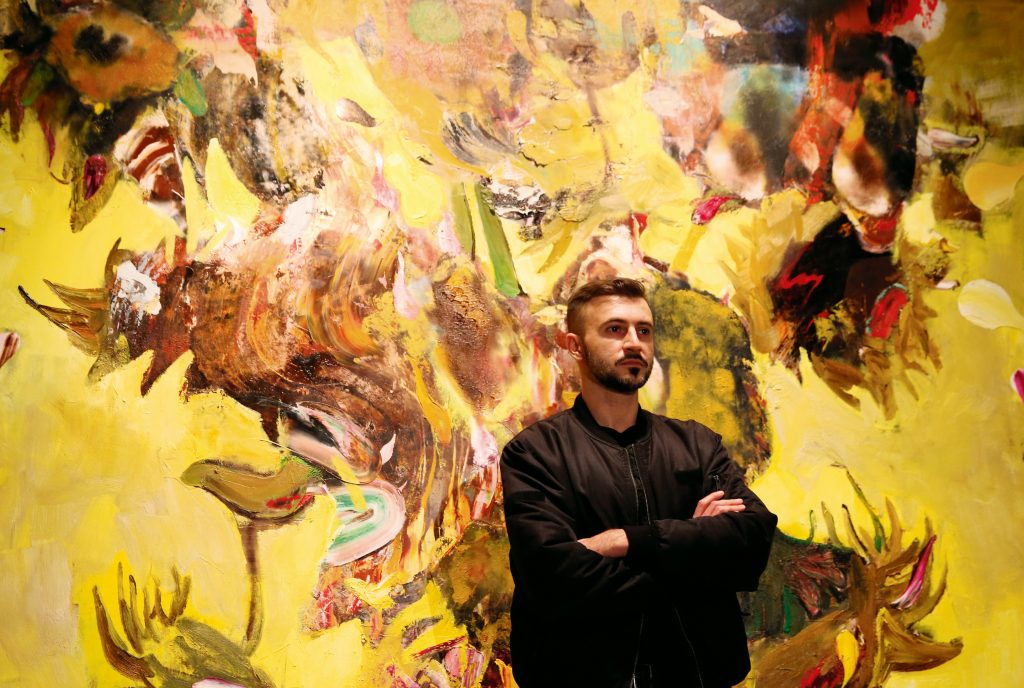
Estimating an artist’s exact net worth is always tricky — much of what they own is the art itself, real estate, and studio reserves. But by piecing together public auction results and gallery sales, you can sketch a rough picture.
Industry estimates put Ghenie’s wealth in the range of $50–100 million. That figure includes:
- Direct income from gallery sales (Pace, Ropac)
- Royalties from secondary-market sales
- His own collection of works held in studio reserves
- Real estate in Berlin and Romania
For collectors, his paintings have become a serious asset class. The annual return on Ghenie investments over the past decade has frequently outpaced traditional financial instruments.
How to Purchase the Artist’s Works: Adrian Ghenie for Sale
Buying a Ghenie isn’t a simple transaction. Demand far exceeds supply, and the artist’s primary market is tightly controlled.
Reliable channels for acquisition:
- Pace Gallery — primary representation for new works
- Galerie Thaddaeus Ropac — secondary sales of earlier pieces
- Plan B (Cluj/Berlin) — the artist’s home gallery
- Christie’s, Sotheby’s, Phillips — secondary market, public auctions
- Private dealers — for clients with established reputations
What to pay attention to before buying:
- Authentication — every work must come with a certificate from the artist or studio
- Provenance — full chain of ownership without gaps
- Condition — Ghenie’s thick paint layers can be fragile, an inspection is mandatory
- Exhibition history — pieces that have appeared in shows are worth more
- Documentation — high-quality photographs, scholarly mentions, catalogue entries
For first-time collectors: don’t rush into million-dollar purchases. Start by studying the market, attending auction previews, talking to gallerists. A Ghenie isn’t an item bought on impulse.
Adrian Ghenie Prints — An Accessible Format for Collectors
If an original canvas is out of reach, prints offer a real alternative. Ghenie produces limited editions of lithographs and etchings — not many, but they exist.
Print prices range from a few thousand to a few tens of thousands of dollars, depending on edition size, technique, and the work being reproduced.
Where to look for original prints:
- Editions issued through partner galleries
- Specialized print fairs (IFPDA, Editions/Artists’ Book Fair)
- Auction houses’ print sections
How to tell an original print from a reproduction: the artist’s signature in pencil, an edition number (e.g., 12/50), a publisher’s stamp, and a certificate. If any of these elements is missing, walk away from the purchase.
A good rule of thumb: never buy prints from random online sources. The market is flooded with fakes, especially for in-demand artists.
Adrian Ghenie has done what seemed impossible for someone from his background — turned the trauma of Eastern European history into a globally legible visual language. His paintings hang in the world’s top museums, his auction records keep climbing, and his influence on a new generation of figurative painters is hard to overstate.
He proved you don’t have to be born in New York or Paris to become a major artist. You need to have something to say — and the technique to say it convincingly. Ghenie has both.
Where his career goes next is hard to predict. But one thing is clear: contemporary painting in the 21st century is no longer thinkable without him.
Frequently Asked Questions
There’s no single official answer, but art historians most often cite The Old Guitarist (1903) by Pablo Picasso from his Blue Period. The painting depicts an emaciated, blind musician hunched over a guitar — an image of poverty, loneliness, and quiet despair. Other strong contenders include Sorrowing Old Man by Van Gogh, Edvard Munch’s The Scream, and Goya’s The Disasters of War.
Several paintings have sold around the $70 million mark. One of the most notable is Suprematist Composition by Kazimir Malevich, which fetched $60 million at Sotheby’s in 2008 (a record for Russian art at the time). Closer to $70 million were several Warhols, Basquiats, and Rothkos. Recently Adrian Ghenie’s own The Hunted approached eight-figure sums on the contemporary market.
Vincent van Gogh. According to legend, he sold just one painting during his lifetime — The Red Vineyard (1888), bought by the Belgian artist Anna Boch for 400 francs in 1890. Today his works are valued in the hundreds of millions, and Portrait of Dr. Gachet held the record for the most expensive painting in the world for years.